

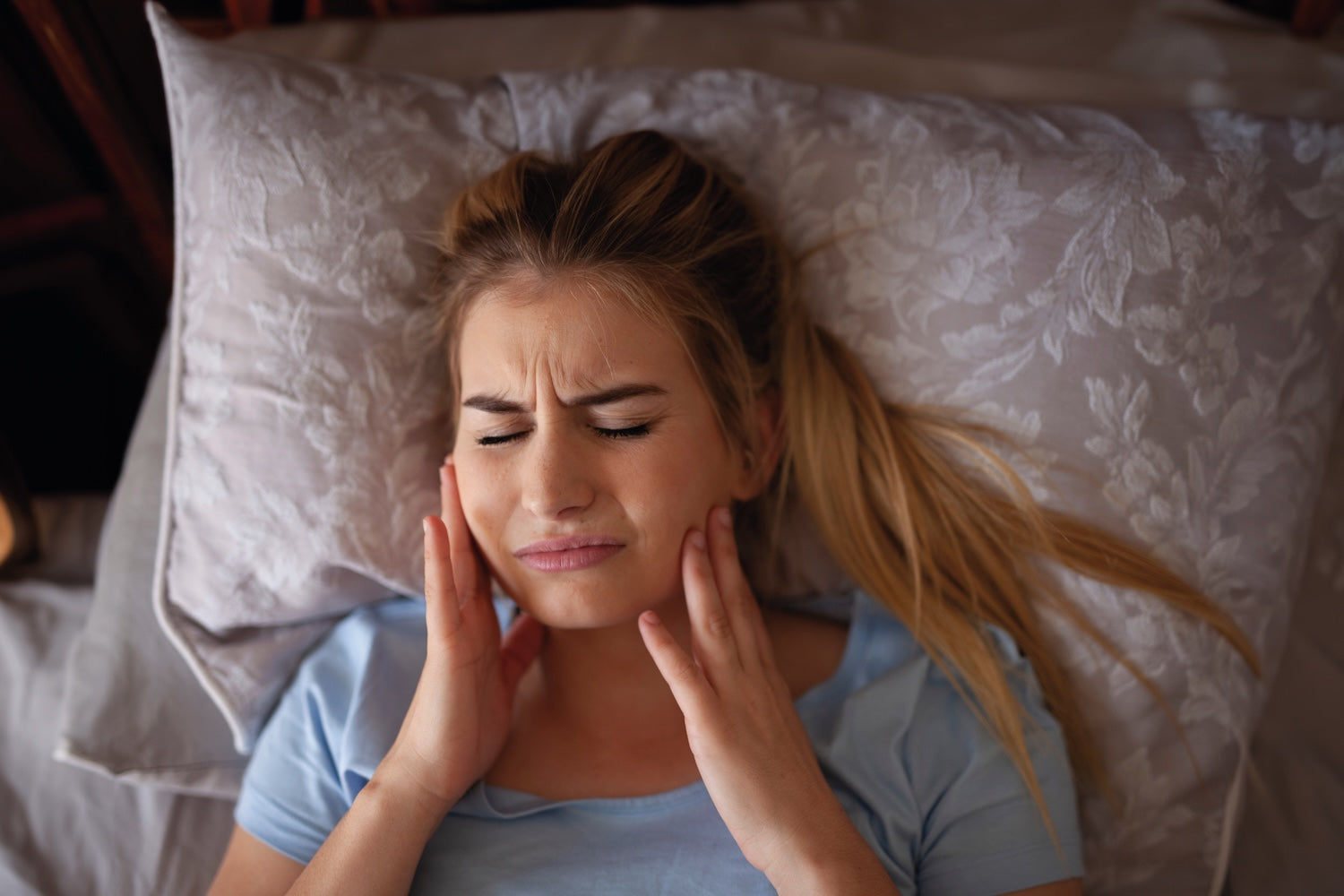
Bruxism is a common, yet often invisible cause of everyday complaints such as headaches, fatigue, and jaw tension. Because most people don’t realize they grind or clench their teeth, the signs often go unnoticed for a long time. In this blog, you’ll learn how to recognize bruxism and what you can do about it.
What Exactly Is Bruxism?
Bruxism is the medical term for teeth grinding or forcefully clenching your jaw. It usually happens unconsciously and often during sleep. The chewing muscles remain tense for extended periods, which can lead to a wide range of symptoms — affecting everything from your teeth to your energy levels.
Do You Recognize the Tension?
You don’t need visible tooth wear to suffer from bruxism. These symptoms may indicate hidden jaw tension:
- You wake up with a headache or a tired jaw
- Your teeth feel sensitive
- You notice yourself clenching your jaw during the day, for example while concentrating
- You experience pain in your jaw joint or hear clicking sounds when opening your mouth
- You sleep restlessly or wake up frequently without a clear reason
- Your neck or shoulder muscles feel tense without an obvious cause
The more of these signs you recognize, the greater the chance that bruxism is contributing to your symptoms.
A Simple Test: Close your mouth, relax your tongue, and check whether your upper and lower teeth are touching. In a relaxed resting position, they shouldn’t be.
Are they touching? The Jawly may be able to help.
What Can You Do?
The Jawly is specifically designed to safely and gradually stretch your chewing muscles. By placing the tool between your teeth and gently turning the knob, light tension is created in the jaw muscles. Hold this briefly, then consciously release. This gives your muscles a clear signal to relax.
Would you like to read more tips? Find out about other supportive measures.
A Daily Routine That Makes a Difference
Ideally, use your Jawly twice a day — for example in the morning and evening — and gradually build up to around two minutes per session. Many users notice a difference within two weeks: fewer headaches, a calmer feeling, and more energy when waking up.
Not Sure If You Have Bruxism?
If you’re unsure, it’s important to take the signs seriously and take action. Start small, observe your symptoms, and try an approach focused on relaxation. The earlier you address it, the sooner your body can recover.


